The Fiver Towel Gamble: How to Read a Secondhand Bath Towel Before You Buy

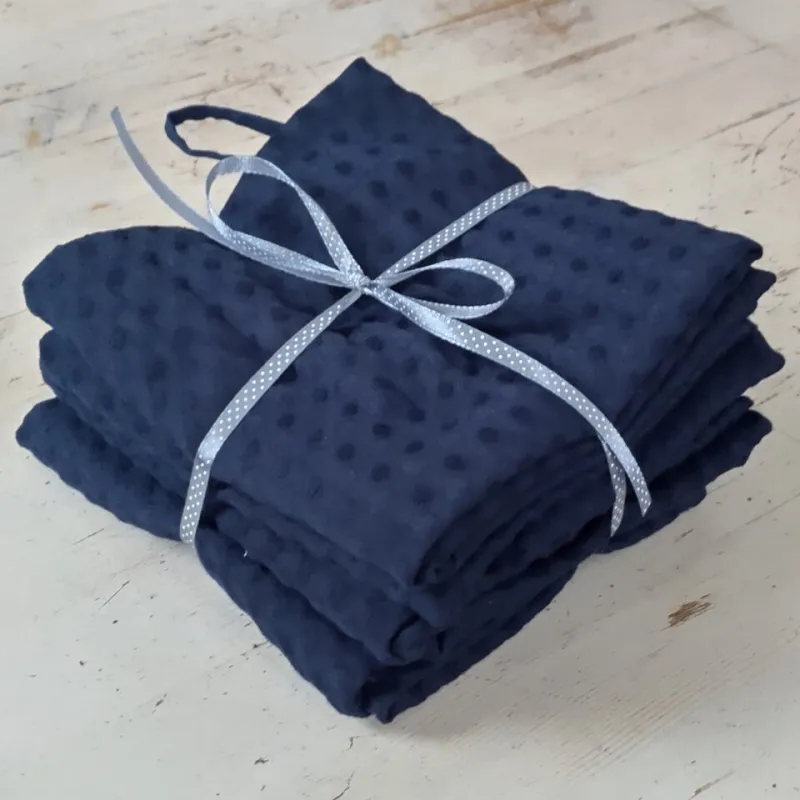
Photo: secondhand towels on charity shop rail UK, via stylecaster.com
Charity shops are full of towels. Most are not bargains. A few are genuinely excellent. The difference is not luck or a sixth sense; it is a two-minute inspection done in the right order, ideally before you start imagining the towel folded neatly on your heated rail.
Secondhand towels are a sensible buy in principle. Cotton is a hard-wearing fibre, plenty of good towels get donated simply because someone redecorated, and a well-made towel can outlast three cheap ones. But charity shops generally sell as seen, with no returns and no fitting room. So the test happens on the shop floor, not in your bathroom.
Start with the pile, not the pattern
Pick the towel up and look at the surface in daylight if you can. Terry towelling should have upright loops that feel springy under your thumb. If the loops are flattened into a matted crust, that towel has done serious work. A little flattening is normal after washing; a bald, shiny patch is not.
Run your hand across the middle and the edges. You are feeling for thin spots, pulled loops and areas where the backing is starting to show through. Turn it over. A towel can look presentable on the front and be worn through on the reverse, especially where it has rubbed against a rail or a door hook.
Pattern is the last thing to judge. A loud stripe can hide a lot of sins, and a plain cream towel can look tired in a way a dark navy one does not. If you are buying for a British bathroom that already has enough colour, ignore the print and concentrate on the cloth.
Check the edges like you mean it
The long side edges — the selvedge — tell you how the towel was made and how it has been treated. A decent selvedge should be neat and firm, not puckered or wavy. If the side binding is fraying, the towel is already on its way out. You can sew a hem, but you cannot easily rebuild a worn selvedge without it looking like a school project.
Look at the short ends too. Hem stitching should be straight and complete. A loose thread is not automatically a dealbreaker, but a hem that has come away along half its length suggests the towel has been washed hard and dried harder. Check the corners, where towels tend to go first.
The hanging loop is a wear indicator
A missing hanging loop is not the end of the world. It is a five-minute repair if you have a needle and thread, and plenty of good towels lose their loop early. But the loop is useful evidence. If it is stretched, frayed or hanging by a thread, the towel has been used repeatedly and probably hung damp. If the loop is intact but the rest of the towel is thin, trust the thinness over the loop.
Give the towel a gentle tug at the loop and at the hem. You are not trying to rip it; you are checking whether the stitching is already giving up. Anything that shifts too easily will shift more once it is wet and heavy.
Smell is non-negotiable
Hold the towel close and sniff it properly. Musty, damp-cupboard, cigarette smoke or heavy perfume are all warning signs. A faint charity-shop smell is normal and usually washes out. A sour, mildewy smell is different. That is the smell of a towel that was put away damp, and it can live deep in the pile.
If the smell makes you recoil, leave it. There are other towels. You do not want to spend £4 and three washes trying to rescue something that still makes your bathroom smell like a wet dog when the shower runs.
Read the label, then read between the lines
A label is not a guarantee, but it is useful. Look for a high cotton content, ideally 100% cotton for a standard bath towel. A poly-cotton blend can be fine for a guest towel or a utility towel, but it will not feel like the fluffy cotton towel you are probably hoping for. Microfibre is a different product altogether; buy it only if you actually want microfibre.
Check the care label for temperature and tumble-dry guidance. If the label is missing, assume the towel is cotton and wash it cautiously. In 2026, with new towel prices all over the place, a secondhand towel only makes sense if it is clearly better than the budget new option. A £5 charity-shop towel with no label and a worn pile is not value; it is a project.
The price check that keeps you honest
Charity shops are not always cheap. Some price branded towels optimistically. Before you commit, ask yourself what a sensible new towel costs in the same size. A bath towel at £3 to £5 is a fair gamble if the cloth is good. At £8 or £10, you need to be getting genuinely better quality than the new own-brand towel down the road.
Hand towels and guest towels are usually the better secondhand buy. They get less wear, they are cheaper to replace, and a good one can look smart after a wash. Bath towels are the ones to inspect hardest, because they take the most punishment.
Bringing it home: the first wash
Treat a secondhand towel as dirty until it has been washed. Shake it outside first, then wash it separately from your own towels. Use your normal non-bio detergent and choose the highest temperature the care label allows — often 40°C for coloured cotton, 60°C for white cotton if the label permits. Skip fabric softener; it coats the fibres and makes towels feel soft while reducing absorbency.
Dry it thoroughly, either on a line or in a tumble dryer on a low setting. When it is dry, smell it again. If it still smells faintly musty, wash it once more with a little soda crystals rather than reaching straight for bleach. If it still smells after that, it has failed the test.
Finally, do the water-drop check. Drip a little water onto the surface. A good towel absorbs it quickly. If the water beads and sits there, the towel may be coated with softener or simply worn out. Give it one more wash without softener, then demote it to a cleaning cloth if it still will not drink.
When to leave it on the rail
Walk away if the towel is thin enough to see through, if the selvedge is fraying, if there are holes or bald patches, or if the smell does not fade after a wash. Leave the ones with heavy stains that have clearly been through the wash already. Leave anything priced close to new. And leave the towel that feels beautifully soft but has no substance; softness is easy to fake and absorbency is not.
A good secondhand towel is one of the quiet wins of charity shopping: decent cotton, a sensible price, and years of use left in it. A bad one is just a rag you paid to take home. The difference is usually obvious once you stop looking at the colour and start reading the cloth.