The 'Hotel-Quality' Con: What UK Towel Labels Actually Tell You in 2026
Walk into any British homeware shop in 2026 and you'll see the same words plastered across towel packaging: 'hotel-quality', 'luxury Turkish cotton', 'super-absorbent 700 GSM'. They sound reassuring. They are also almost entirely unregulated. As a shopper, you deserve better than marketing speak. Here's how to cut through it.
Why 'Hotel-Quality' Is a Meaningless Claim
There is no British standard for 'hotel-quality'. A hotel might use 400 GSM towels; another uses 600. Neither has to prove anything. The phrase is a mood, not a metric. Same goes for 'luxury' — it's a subjective adjective with no legal definition. When you see it, treat it as decoration.
What You Can Actually Verify on a UK Label
Under UK textiles labelling rules, certain information must be accurate: fibre content, country of origin (if stated), and care instructions. Those are your anchors. Everything else is puffery.
Fibre Content: The Only Bragging Rights That Matter
Look for a clear percentage breakdown. '100% cotton' is a start, but not all cotton is equal. Egyptian cotton has long staples; Turkish cotton can be good too, but the label must specify. If it says 'cotton-rich' without numbers, assume a blend. Blends aren't automatically bad — a bit of polyester can speed drying — but you should know what you're paying for.
Weight and GSM: Read the Small Print
GSM (grams per square metre) is a genuine measure of density, but brands inflate it. A 700 GSM towel should feel substantial and heavy. If the label claims high GSM but the towel feels thin in-store, trust your hands. Also check whether GSM refers to the dry weight or a 'finished' weight after washing — some manufacturers quote the former. And remember: heavier isn't always better. A very dense towel takes longer to dry, which matters in a small UK bathroom.
Weave and Construction
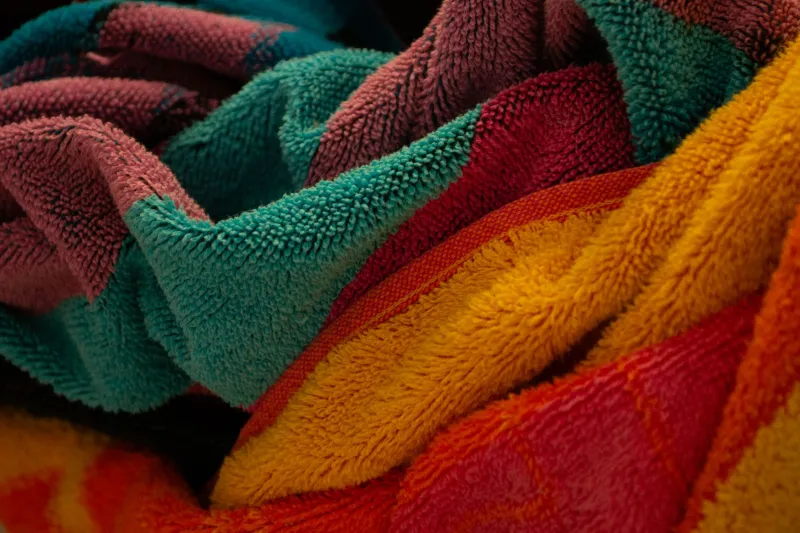
Terry loops give absorbency; a tighter loop is plush but slower to dry. Waffle weaves are lighter and quicker-drying — handy for small bathrooms. Look for reinforced edges and double-stitched hems; they signal a towel that won't fray after a few washes. If the label mentions 'zero twist', that means the yarn is looser, which feels softer but can shed more lint. A good towel should feel balanced: soft but not flimsy.
Origin Claims and Certifications
'Made in Turkey' is a factual claim, but 'Turkish cotton' can mean the cotton was grown there or merely processed there. Look for certifications like OEKO-TEX Standard 100 (tests for harmful substances) or GOTS (organic). These are verifiable. A brand that pays for certification usually has less to hide. If a label says 'eco-friendly' with no logo, ignore it.
Care Instructions as a Quality Signal
A towel that demands dry-cleaning is not a practical British bathroom towel. Good care instructions are simple: machine wash at 40°C, tumble dry low, no fabric softener. If the label is vague or missing, walk away. Clear instructions suggest the manufacturer expects the towel to last.
A Practical Checklist Before You Pay Premium
- Fibre content stated as a percentage, not a slogan.
- GSM figure matches the feel — heavy towel for high GSM, lighter for lower.
- Weave suits your drying habits (terry for warmth, waffle for speed).
- Origin claim is specific ('Made in Portugal') not vague ('European cotton').
- Certification logo you can look up.
- Care label is clear and realistic.
- Price reflects the above, not just the word 'luxury'.
In 2026, value comes from transparency. Ignore the marketing and read the label like a buyer, not a browser. Your perfect towel is the one that dries when you need it, feels good on your skin and doesn't ask for a second mortgage. That's the only 'hotel-quality' that matters.