The Three-Wash Rule: Getting a Genuine Trial Out of a UK Towel Returns Window
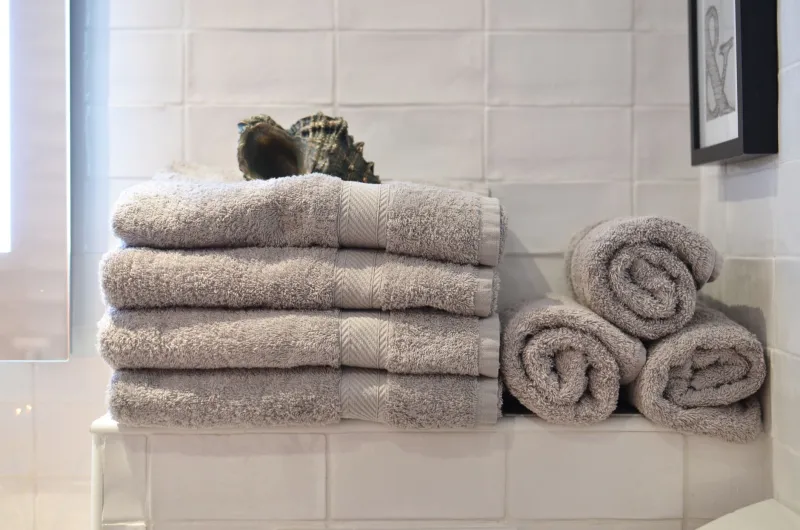
Buying a towel online is a bit like buying a mattress. The photos are lovely, the description says "hotel quality" for the fourth time, and then a flat, slightly stiff rectangle turns up in a plastic bag. The difference is that you can't lie on a towel for twenty minutes in a shop to work out whether it suits you — so the returns window ends up doing the work instead.
The trouble is that most of us treat that window as a free rental. It isn't. Here's what you can realistically do between the delivery van and the returns deadline, and where the line actually sits.
What the 14-day right really covers
Under the Consumer Contracts Regulations 2013, anything bought at a distance — online, by phone, by catalogue — comes with 14 days from delivery to cancel, plus another 14 to get it back to the retailer. That sounds generous, and it is. But the wording matters: you're allowed to inspect the goods as you would in a shop. You are not allowed to use them.
A towel you've held up to the light, felt, and draped over the rail for an hour is inspected. A towel that's been through a 40-degree cycle with your gym kit is used. Retailers are entitled to knock money off the refund for anything beyond inspection, and plenty will. So the "wash it and see" plan only works if you're prepared to argue the toss, or to keep it.
Where shops are more generous than the law
A handful of UK retailers go further. Bedding and towel "home trial" schemes do exist — 30, 60, sometimes 100 nights — and they can be genuinely useful. But the towel-specific exclusions rarely make it into the headline. Look for the sentence that says "unused and in original packaging", because it will be there somewhere, and it overrides the big number on the banner.
Returns policies in 2026 are, if anything, a shade tighter than they were a few years back, so the practical rule is this: find the returns page before you order, not after. John Lewis, Dunelm and M&S all publish theirs clearly and each will tell you in a line or two whether a washed towel is coming back. If a site buries the information three clicks deep, that tells you something too.
The free tests you can run in the first hour
You can learn a surprising amount without going near the washing machine.
The water drop. Lay the towel flat and drop a teaspoon of water on it from a couple of centimetres up. A decent cotton towel takes it in within a few seconds. If it beads and sits there looking pleased with itself, the towel has a finishing dressing on it and you're several washes away from it behaving properly.
The colour bleed. Wet a corner of the towel, then rub it firmly on a damp white flannel or a sheet of kitchen roll. Any transfer at all means the dye is loose — and that's before it has met a warm wash.
The loft press. Push your thumb into the pile and take it away. Good terry springs back. Cheap terry stays flat and slightly shiny, which is the shortest route to "scratchy after six weeks".
The arm test. Rub the face of the towel along the inside of your forearm for ten seconds. That's much closer to what your skin will feel than your palm is.
The label and the tape measure. Check the fibre percentages against the listing, and measure the thing. Towels shrink, but they shouldn't arrive eight centimetres short of what you paid for.
The one job before you cut the tags
Photograph everything: the listing, the care label, the delivery note, and the returns page with the date visible. If a towel turns out to be a shedder, you want the evidence ready rather than an argument in a chat window three weeks later. Keep the packaging as well — a fair few returns are refused purely because the item can't go back in something.
Then make a decision by day ten. Not day fourteen. Posting things back takes time, and a weekend disappears faster than you'd think.
When washing is fair game
Here's the bit most guides skip. Your statutory rights sit alongside the returns policy, and they don't care whether you've washed the thing.
Under the Consumer Rights Act 2015, goods have to be as described, of satisfactory quality, and fit for purpose. A towel that fills the lint filter with fluff on its first wash, turns your white bathmat pink, or comes apart at the hem after two cycles isn't a change of mind — it's a fault. You have 30 days from delivery to reject it for a full refund, and after that the retailer gets one chance to repair or replace before you can ask for your money back.
Two caveats. Wash it as instructed — 30 or 40 degrees, no fabric conditioner, no bleach unless the label allows it — because a towel boiled at 90 with bio powder hands them an easy excuse. And keep the photos.
The two-wash verdict
If you genuinely want to know what a towel is like, you have to wash it twice. The first wash strips the dressing and the factory finish; the second shows you what the pile is actually going to do. Dry it the way you'd normally dry it — radiator, airer, tumble on low — because drying behaviour is half of what makes a towel annoying or not.
After two washes you'll know three things: whether it dries overnight in a British bathroom, whether it's still soft, and whether it's still the size it was. If the answers are no, no and no, and you bought it on the strength of the description, that's worth a conversation with the retailer. If the answers are yes, you've got a towel — and ordering the matching set is a far better bet than buying three blind.
The short version
Inspect properly in the first fortnight, keep the packaging, photograph the paperwork, don't wash it as a fishing expedition, and remember that faulty is a different argument from "not for me". And if you're testing a range, buy one towel first. The postage on a second order is a lot cheaper than a cupboard full of towels you don't like.