What Zero-Twist and Ring-Spun Really Mean Once Your Towel Is Hanging Up

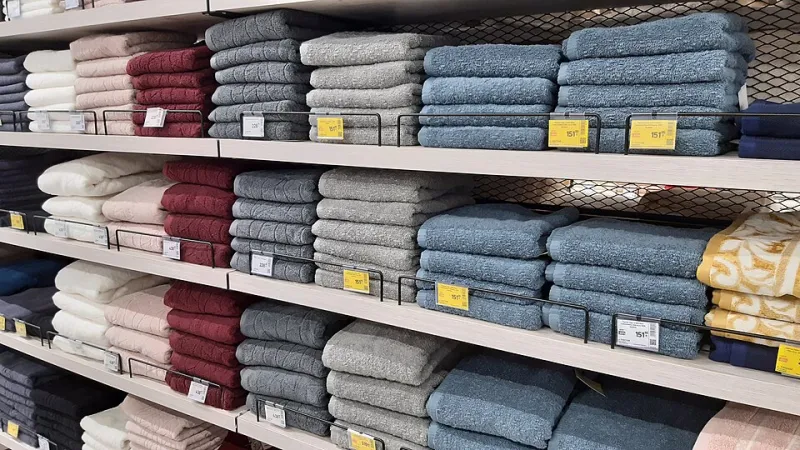
Photo: folded cotton towels on bathroom shelf natural light close up, via i.pinimg.com
Stand in the towel aisle of a British homeware shop in 2026 and you will see the same words doing the rounds: zero-twist, combed, ring-spun, long-staple, low-lint. They sound like upgrades. Some of them are. Others are simply the textile equivalent of a posh font on a menu.
GSM — grams per square metre — has become the go-to number for shoppers, and it is useful. It tells you roughly how heavy a towel is. But weight is only half the story. Two 550 GSM towels can feel completely different if one is made from tightly twisted ring-spun yarn and the other from loose, low-twist fibres. If you want to know why one towel feels soft and the other feels like a damp flannel, you need to look at construction.
GSM is the headline. Construction is the plot.
A high GSM towel is not automatically a good towel. It is just a heavier one. Weight can mean more absorbency, but it can also mean more water held in the pile and a slower drying time — which is not ideal in a small British bathroom with a heated rail and an extractor fan doing its best.
Construction terms tell you how the yarn was made and how the pile was put together. That is what affects softness, shedding, drying time and how long the towel lasts before it goes crisp and scratchy. So here is the decoder.
Zero-twist: soft, thirsty, and a bit high-maintenance
Zero-twist yarn has had most of the twist taken out of it. That makes the towel feel thick, smooth and almost spongy. It soaks up water quickly, which is why it turns up in a lot of spa-style towels and why it feels so nice on the shelf.
The trade-off is strength. Less twist means the fibres can work loose, so you may see more lint and the towel can lose its bounce sooner. It is not the best choice for a bath towel that gets used twice a day by three people and then draped over the shower screen. A zero-twist hand towel in a guest bathroom? Lovely. A zero-twist family bath towel that gets dragged around the house? It will age faster than you would like.
Worth paying for if you want softness and you are happy to replace it sooner. Not worth it if you want a workhorse.
Combed cotton: the quiet upgrade
Combed cotton has been through a combing process that removes short fibres and bits of debris. What is left is smoother, stronger and less likely to shed. In real life, that means fewer fluffy bits on your face, less lint in the tumble dryer filter and a towel that stays softer for longer.
It is not a magic label — a cheap combed towel can still be a cheap towel — but if you see combed cotton at a sensible price, it is usually a good sign. It is one of those details that does not sound exciting but quietly improves the towel every time you use it.
Ring-spun: the one that earns its keep
Ring-spun yarn is made by twisting fibres more tightly, which gives a stronger, smoother thread. Towels made this way tend to feel denser and more substantial, and they usually survive repeated washing better than open-end or loosely spun alternatives. They also shed less.
For a British family bathroom, this is probably the most useful word on the label. It does not sound as glamorous as hotel quality, but it is more likely to give you a towel that still feels decent after a year of washes. If you are choosing between two towels at the same price and one says ring-spun, that is the one I would pick up first.
Pile density: the number nobody prints
Pile density is about how closely the loops are packed, not how tall they are. A dense pile feels plush and heavy, but it also holds more water and takes longer to dry. In a small UK bathroom with a heated rail and a window that barely opens, that matters.
A medium pile at around 500 to 600 GSM is often the sensible middle ground. A very dense 700 GSM towel can feel wonderful on holiday, but at home it may spend most of the week slightly clammy. If you like a thick towel, buy one, but give it proper airing space and do not expect it to dry as fast as a lighter towel.
Where the jargon shows up in daily use
Softness: zero-twist and combed cotton both help. Combed cotton tends to keep its softness longer.
Drying time: lower pile and lower GSM dry faster. A high-density zero-twist towel is thirsty but slow.
Shedding: ring-spun and combed cotton usually shed less. Zero-twist can be linty, especially in the first few washes.
Longevity: ring-spun and combed cotton tend to win. Zero-twist is a comfort purchase, not a buy-it-for-decades purchase.
The jargon worth paying for — and the rest
Worth paying for: combed cotton, ring-spun, a believable GSM, and honest size information. Those are the details that change how the towel behaves after the second wash, not just how it feels in the shop.
Treat with suspicion: hotel quality, spa luxury, ultra-soft. These are feelings, not standards. Egyptian cotton is only meaningful if the label says where it comes from and how it is made. Bamboo can be lovely, but it is not automatically better for a British bathroom. Anti-bacterial finishes are usually a last-minute treatment, not a construction detail.
A two-minute label check for 2026
Check the composition first. Then look for construction words like combed and ring-spun. Then check the weight — not because heavier is always better, but because it tells you what you are buying. Finally, read a few reviews that mention shedding and drying time. If people are complaining about fluff in the dryer filter, believe them.
And check the returns policy. A towel is one of those things you need to feel after a wash, not just on the shelf.
Bottom line
For most British homes, the sweet spot is a combed, ring-spun cotton towel at a medium weight, with a pile that dries in a normal bathroom. Zero-twist is a nice extra if you want softness and you are prepared to replace it sooner. Combed and ring-spun are the words that actually change how a towel feels once it is hanging up — not just when you are standing in the aisle.