Buy the Towel It Will Be After Six Washes, Not the One on the Shelf

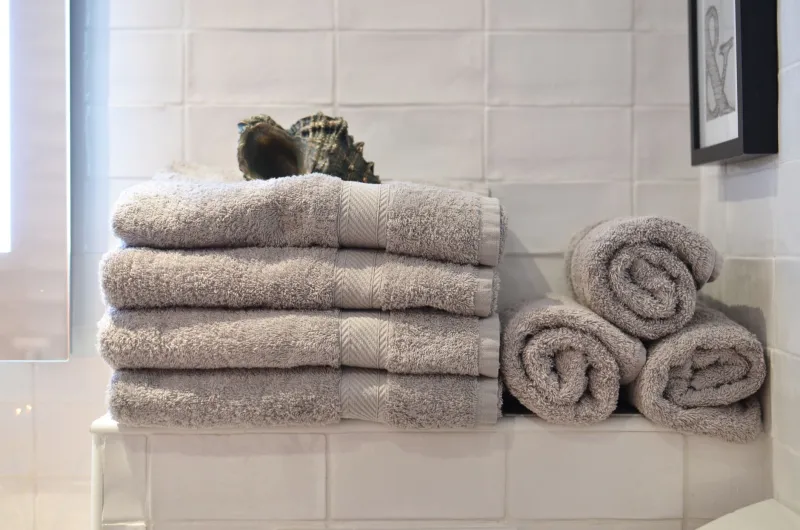
Photo: folded cotton bath towels on bathroom shelf natural light, via static1.pocketlintimages.com
A towel can feel positively luxurious in the shop and oddly stingy by the time it has been through the wash a few times. It is not usually a con. Cotton and bamboo fibres move, relax and tighten as they go through water, heat and drying, and the towel you take home is often not quite the towel you end up with. If you buy purely on how it hangs on the shelf, you can easily end up with a bath sheet that behaves more like a bath towel.
The sensible approach is to buy for the towel it will be after it has settled, not the one that is currently being steamed and folded in a shop in a retail park. That means knowing where the missing centimetres go, which labels are worth trusting, and how much slack to allow without ending up with something that trails on the bathroom floor.
The towel in the shop is not finished yet
New towels are often stretched and pressed during manufacturing and packing. The yarn has been pulled straight, the loops have been brushed up, and the whole thing has been made to look neat on a shelf. Once you wash it, the fibres take up water, the yarn relaxes, and the fabric pulls in. Some of that shrinkage has already been dealt with by the manufacturer. Some has not.
That is why a towel can feel slightly tighter and shorter after the first wash even if you followed the care label. It is also why a towel that feels enormous in the shop can feel merely normal after a month. A small amount of shrinkage is part of the fabric's life, not a fault. The problem starts when you have bought a size with no room for it to happen.
Where the missing centimetres actually go
Length is usually the bigger issue. Towels are woven under tension, and the lengthwise threads tend to pull in more than the width once that tension goes. You may also notice the towel feels thinner and less plush after a few washes as the terry loops flatten and the fibre settles. That is normal too, especially with heavier towels that have a lot of air pressed out of them in the shop.
Bamboo and bamboo-viscose towels can be particularly prone to movement in the first few washes. Cotton can shrink too, especially lower-twist or loosely woven cotton, and towels that feel very soft and floppy in the shop are not automatically the most stable. A heavier towel is not a safer bet either. Weight tells you about density and absorbency, not about how much the length will pull in.
The realistic figure for many UK domestic towels is a few per cent in length after the first wash, with some cheaper or looser towels going further. Treat five to eight per cent as the amount you should plan for rather than the amount you hope for. On a 150cm bath sheet, that is roughly 7cm to 12cm of length. On a 90cm width, it is 4cm to 7cm. Those numbers are not dramatic on paper, but they are exactly the difference between a towel that wraps properly and one that leaves a cold gap at the back.
The label clues that matter more than the shelf size
Look for wording such as 'pre-shrunk' or 'sanforised' where it appears. These are not magic phrases, but they do suggest the manufacturer has done some of the settling before the towel reaches you. A care label that recommends a cool or moderate wash is also a useful signal: it suggests the towel is not relying on a hot wash to perform.
Be sceptical of vague 'hotel quality' claims and size descriptions without measurements. A towel labelled simply as a 'bath sheet' can vary wildly between shops. Check the actual centimetres on the pack or product page, and check whether those measurements are for the towel before or after washing. If the retailer does not say, assume they are the dry, unwashed measurements.
GSM is worth knowing, but it will not tell you how much a towel will shrink. Neither will '100% cotton' on its own. Long-staple cotton can make a lovely towel, but it can still pull in after washing. The useful information is the fibre blend, the stated size, the care instructions and, ideally, a review from someone who has actually washed the thing rather than just unwrapped it.
The washing habits that make it worse
Heat is the enemy of a stable towel. A hot wash, a hot tumble dry and a long spell on a very warm heated rail all encourage fibres to tighten and loops to flatten. Washing at 30°C or 40°C with a normal spin, shaking the towel out before drying, and line drying or using a low tumble setting will generally keep shrinkage closer to the normal range.
Overloading the machine is another quiet culprit. A tightly packed drum means the towel cannot move properly, detergent does not rinse out as well, and the fabric gets more beaten about than it needs to. Using too much detergent or fabric conditioner also makes towels feel stiff and less absorbent, which can make a shrunken towel feel even worse than its measurements suggest.
If you have bought a towel that is already on the small side, do not try to fix it with a hot wash and a hot dryer. That is the quickest way to turn a slightly short towel into a noticeably short one. Wash it cool, dry it gently, and judge the size after a few cycles rather than after the first one.
Do the size maths before you pay
A standard UK bath towel is often around 70cm by 125cm, while a bath sheet tends to start around 90cm by 150cm and go up from there. If you assume five to eight per cent shrinkage in length, a 125cm bath towel may settle closer to 115cm to 119cm. A 150cm bath sheet may settle around 138cm to 143cm. That is still a useful bath sheet, but it is not the same towel you measured in the shop.
For a bath towel, add at least 5cm to 10cm to the length you actually need. For a bath sheet, add nearer 10cm if you want it to wrap comfortably after washing. If you are tall, broad-shouldered, or simply like a proper overlap at the front, buy the longer size from the start rather than assuming it will shrink down to a perfect fit. Shrinkage does not improve an oversized towel that was already too big for your rail.
A sizing rule that survives real British bathrooms
Measure the space where the towel will actually live, not just your body. A bath sheet that looks generous in the shop can become a nuisance if it drapes onto the floor, blocks the door, or hangs so low over a radiator that the bottom edge never dries. Check the width of the rail, the height of the hooks and the clearance above the floor. Then check the towel's unwashed measurements and subtract roughly five to eight per cent from the length.
If the shrunken size still fits the space and still wraps around you, buy it. If it only works before washing, leave it on the shelf. That single check will save you from most of the disappointment that comes with a new towel that mysteriously feels smaller by Bonfire Night.
If you have already bought short
If the towel is unwashed and still has its labels, take it back. A towel that is too short before washing is only going to get shorter. If it has already been washed, accept that it is now a different size and use it where a shorter towel works: as a hair towel, a gym towel, a spare for the airing cupboard, or a towel for the dog after a muddy walk. Then buy the next one with shrinkage in mind.
A good towel is not the one that feels biggest on the shop shelf. It is the one that still does its job after a few months of real British bathroom life: cool washes, unreliable drying weather, a warm rail that is sometimes on and sometimes not, and a family who never quite hang it up properly. Buy for that towel, and you are far less likely to end up with a bath sheet that shrinks out of favour.