The Family Bathroom Towel Audit: Who Uses What, and How Often It Should Be Washed

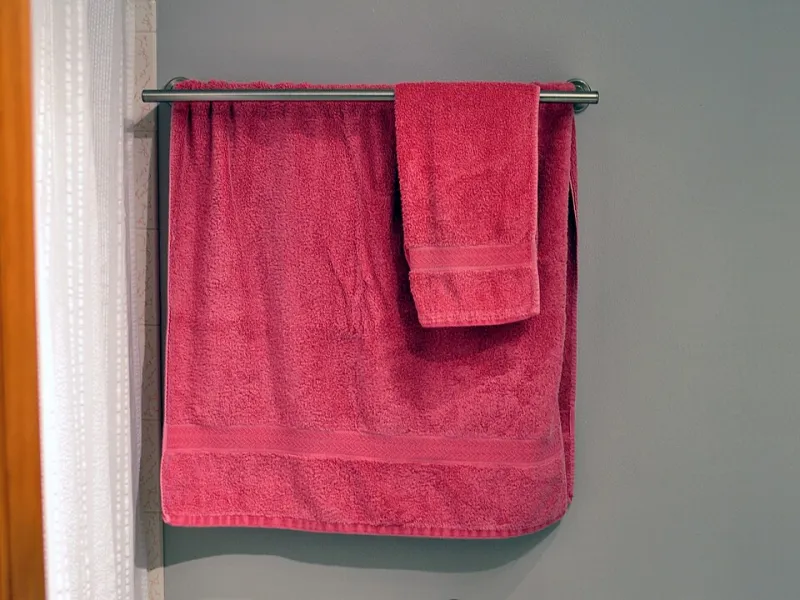
Photo: family bathroom towels on individual hooks colour coded UK home, via i.pinimg.com
There is a moment in every shared British bathroom when you reach for a towel and realise it is not yours. It is damp, it smells faintly of someone else's shower gel, and it has been folded over the rail in a way you would never fold it yourself. Nobody admits to this. Everybody does it.
The trouble is not that families are grubby. It is that most households have never actually sat down and worked out the towel maths. One rail, four people, a hand towel by the basin and a bath mat on the floor is not a system. It is a hopeful arrangement. And in a family bathroom, hope tends to end up on the floor.
The 'It's Only Me' Myth
Ask anyone in a busy house who uses which towel and you will usually get a confident answer. Ask again a week later and the truth has shifted. A child grabs the nearest towel after football. A partner uses the big bath towel because theirs is still on the radiator. A guest mistakes the hand towel for a bath towel. Someone's towel falls on the floor and gets kicked under the bath.
In a shared bathroom, towels do not stay personal just because you bought them in different colours. They become communal the moment they are hung too close together, left damp, or piled on the same hook. The hand towel is the worst offender. It is touched by every person who washes their hands, often several times a day, and it is expected to dry between uses in a room that is already steamy.
So the first part of any towel audit is honesty. Stop assuming that 'it's only me' applies. In a family bathroom, it rarely does.
Do the Shared-Bathroom Maths
You do not need a laboratory to understand what is happening. You need a rough count of contact events and drying time.
Take a household of four. Each person uses a bath towel once or twice a day. If you wash those bath towels once a week, each towel is being used for around seven to fourteen showers before it sees the washing machine. That is not necessarily a disaster if the towel dries fully between uses, but it is a lot of damp fabric sitting in a warm room.
Now look at the hand towel. Four people, several hand washes each, maybe extra trips for children, cooking and cleaning. A single hand towel by the basin can easily be used twenty or more times between washes. If it stays damp through the evening, it never really gets a chance to recover.
The bath mat is the same story. It absorbs splashes, foot water and whatever comes off the floor. It is not a towel you use on your body, but it is still a textile doing a dirty job in a wet room.
The point of this maths is not to make you panic about germs. It is to show that 'washing it when it looks dirty' is not a reliable schedule in a shared bathroom. Towels can look fine and still feel damp, sour or heavy. Your nose and your hands are better guides than your eyes.
Set Wash Frequencies You Will Actually Keep
A workable shared-bathroom routine is better than a perfect one nobody follows. As a rough UK household guide:
- Hand towels: wash every one to two days in a busy bathroom. If the towel is still damp at bedtime, it needs changing sooner.
- Bath towels: wash after three or four uses if they dry fully between showers. In a shared bathroom, or during cold and damp weather, lean towards more frequent washing.
- Shared bath towels: treat them like a hand towel. If more than one person is using the same bath towel, wash it daily or every other day.
- Face cloths: wash after each use. They are small, so there is no excuse for leaving them in a damp heap.
- Bath mats: wash weekly, and more often if the bathroom is shared by children or gets very steamy.
These are not clinical rules. They are practical starting points. If someone in the house is unwell, if the bathroom has no window, or if towels are hanging over each other on a rail, wash more often. If you have a good heated rail and plenty of air movement, you may get away with slightly longer. The towel itself will tell you.
Colour-Coding Without Turning the Bathroom Into a Gym
Colour-coding works, but only if it is simple enough to survive real life. Four people do not need four matching sets in seventeen shades. They need one clear colour each, plus a separate colour for hand towels.
Keep it boring. Dark grey for one person, navy for another, olive for the third, maybe a warm ochre for the fourth. Choose colours that cope with hard water and frequent washing rather than pale shades that show every mark. Then label the hooks if you need to. A small initials sticker on the wall hook is not glamorous, but it stops the daily towel shuffle.
The bigger rule is separate jobs. A hand towel should not double as a bath towel. A bath towel should not be left on the floor as a bath mat. Give each towel one job and one place to dry.
Hooks, Heights and the Drying Gap
Most shared-bathroom dampness comes down to overcrowding. Towels hung on top of each other stay wet. Towels folded over a rail in a thick layer stay wet. Towels dropped behind the radiator stay wet, and then they get that familiar sour smell.
The fix is unglamorous: more hooks, more space, less piling. Put individual hooks at different heights so children can reach theirs without dragging everything else down. Leave a gap between towels so air can move. If you use a rail, hang towels in a single layer rather than folding them over twice. A simple over-door hook on the back of the bathroom door can take one towel without crowding the main rail.
And if a towel feels cold and clammy at the end of the day, do not put it back on the hook for tomorrow. That is the moment the shared-bathroom maths stops being theoretical.
The Small Changes That Stop One Towel Becoming Everyone's Problem
You do not need a bathroom renovation. You need a system that everyone can follow without a briefing.
Start with two hand towels rather than one, so there is always a dry one ready while the other is in the wash. Give each person one bath towel and one hand towel, not a cupboard full of spares that never get used. Keep a small laundry basket in or near the bathroom so towels go straight in rather than lingering on the floor. Wash the bath mat on the same day each week, perhaps the same day as the bedding, so it becomes a habit rather than a chore.
At Towls, we would rather you bought four decent towels and washed them properly than eight mediocre ones that never dry. A shared bathroom is not a hotel. It is a small, steamy, heavily used room where four people are trying to get out of the door on time. The towel system should make that easier, not add another argument.
The honest answer to 'whose towel is that?' is usually 'everyone's, unfortunately'. Once you accept that, the fix is simple: separate hooks, clear colours, realistic wash days and enough air for the towels to dry. Not hygiene paranoia. Just a fairer share of the drying space.