The Most Hard-Working Textile in Your Bathroom Is Probably the Bath Mat
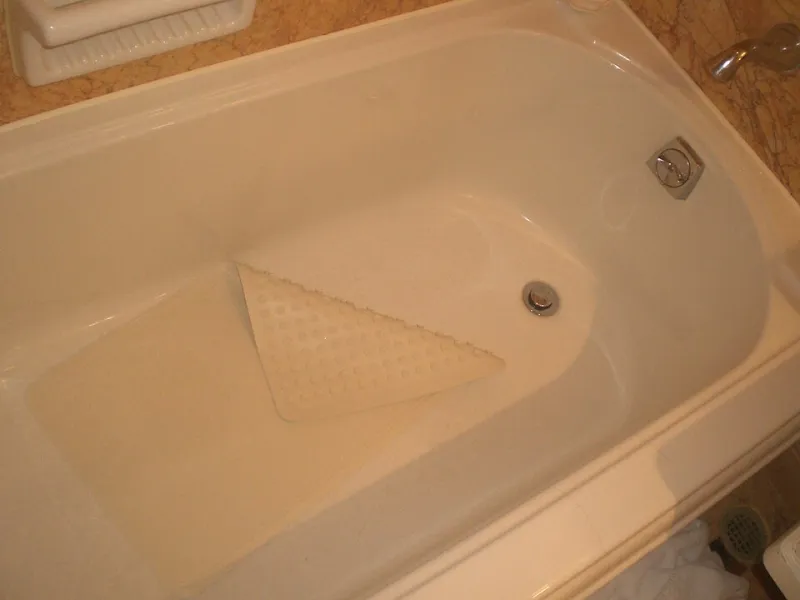
Photo: Coruberbenda, CC BY-SA 3.0, via Wikimedia Commons
The bath mat is the bathroom's least glamorous purchase. It is not draped over a rail for guests to admire, it does not get folded into a linen-cupboard display, and nobody posts a picture of it on Instagram. Yet it takes more punishment than most towels in the house. It gets wet feet, stray shampoo, the occasional puddle and a lot of standing about. If your bath mat is currently a sad, damp rectangle that never quite dries, it is not being dramatic. It is being badly treated.
A bath mat is not a towel. It has a different job, a different backing and a different set of rules. Treat it like a piece of bathroom kit rather than an afterthought and the whole room feels better underfoot.
First, work out what job your mat is actually doing
Most British bathrooms ask a bath mat to do two jobs at once. It catches drips when you step out of the shower or bath, and it gives you somewhere dry to stand while you clean your teeth. In a small ensuite or a Victorian terrace bathroom, those two jobs might happen in almost the same square metre.
That matters because a mat designed for stepping out of a shower needs to absorb water quickly and dry fast. A mat parked at the basin mostly needs grip and a bit of comfort. If you buy one huge, deep-pile mat and expect it to handle both, you often end up with a soggy centre and dry edges. Two smaller mats, or one mat that is easy to lift and hang, can be more practical than one luxury slab.
Backing matters more than the bit you can see
The top of a bath mat gets all the attention. The backing decides whether it stays put, how it dries and how long it lasts. In the UK, most mats fall into two broad camps: rubber or latex-backed, and cotton or fabric-backed.
Rubber-backed mats are the grip champions. They sit flat on tiles and vinyl and are less likely to slide when someone steps out of the shower in a hurry. The trade-off is breathability. Moisture can get trapped between the backing and the floor, so these mats need lifting and drying properly. Do not leave one stuck to the floor for days and then act surprised when the underside smells like a pond.
Cotton-backed mats are breathable and easy to wash, but they can shuffle about on smooth flooring. If you have a slippery tile floor, add a non-slip underlay or choose a mat with a proper grippy backing. Suction-cup mats work well on smooth surfaces but are less useful on textured or uneven tiles. Check the label before buying, and avoid any backing that feels brittle or starts to crumble in the shop. That is not a bargain. That is a mess waiting to happen.
Sizing for real British bathrooms, not showroom bathrooms
A bath mat should fit the floor you have, not the floor you wish you had. Measure the gap between the bath or shower tray and the nearest wall, the door swing, and the space around the pedestal basin. A mat that blocks the door or curls up under the basin is not doing anyone any favours.
Standard UK bath mats are often around 50 x 80cm, with larger 60 x 90cm versions for bigger bathrooms. In a compact ensuite, a 40 x 60cm mat may be plenty. In a bathroom with a shower bath, a runner-style mat along the bath edge can work better than a big square. If your mat overlaps the shower tray or sits half under a cabinet, it will never dry evenly.
Think about where the mat will hang, too. A huge mat that is too heavy for the radiator or too wide for the shower screen is a mat that ends up on the floor. Buy for the drying space as well as the floor space.
The soggy-mat problem, without ripping up the floor
You do not need underfloor heating to keep a bath mat dry. You need airflow and a bit of routine. The classic mistake is leaving the mat flat on the floor after every shower, with the bathroom door shut and the window closed. That is not drying. That is slow marinating.
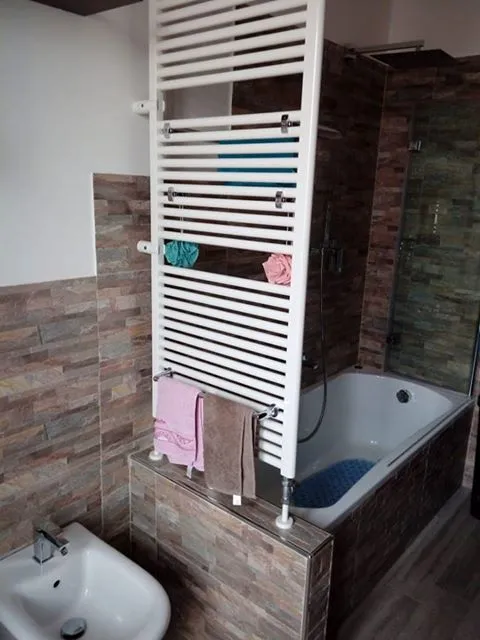
After use, give the mat a shake and hang it over the edge of the bath, the shower screen, a radiator or an airing cupboard rail. If it has a rubber backing, make sure the back gets air too, not just the fluffy side. In a shared bathroom, two mats on rotation is a simple fix: one on the floor, one drying. It sounds fussy until you realise it means never stepping onto a cold, damp mat again.
Keep the room ventilated. Use the extractor fan, open a window if you can, and wipe up standing water rather than letting the mat soak it up. If the mat lives in front of the basin, lift it after the morning rush instead of leaving it there all day. Small habits beat expensive gadgets.
Washing that does not wreck the backing
Bath mats get washed far less often than they should. Once a week is a sensible baseline in a busy home, and more often if it is shared or sits on a floor that gets very wet. Shake it out first, vacuum both sides if it is dusty, and check the care label before doing anything heroic.
Most cotton mats can go on a 40C wash, but rubber-backed mats often prefer 30C. Use a mild detergent and skip the fabric conditioner, which can coat the fibres and reduce absorbency. Wash mats separately from towels if you can, or at least avoid overloading the drum. A mat that cannot rinse properly will dry stiff and smell faintly of the product you used.
Drying is where rubber-backed mats come unstuck. A tumble dryer on a high setting can degrade the backing, so only tumble on low if the label allows it. Otherwise dry flat or hang it somewhere airy. Cotton mats are more forgiving, but they still need to be completely dry before they go back on the floor. A mat that is warm and dry on top but damp underneath is not dry.
What to look for when you buy
Ignore the spa-style photography for a minute. Look at the backing, the weight, the size and the washing instructions. A slightly lighter mat that dries quickly is often more useful in a UK bathroom than a heavy, plush mat that holds water like a sponge. Microfibre mats dry fast but can slide about; cotton mats feel nicer but need more drying time. Neither is automatically better. Match the mat to your floor, your bathroom and your willingness to hang it up.
And please, do not promote an old bath towel to bath-mat duty. It bunches, it slides and it will never lie flat. A bath mat is a small purchase that earns its keep every single day. Give it the same respect as the towels and it will stop being the damp, neglected rectangle in the corner.